UPI transactions jumped 28% to 3.75 billion over the Diwali weekend, worth ₹4.99 lakh crore. Here are the numbers, what drove them and what the coming UPI merchant fee means for you
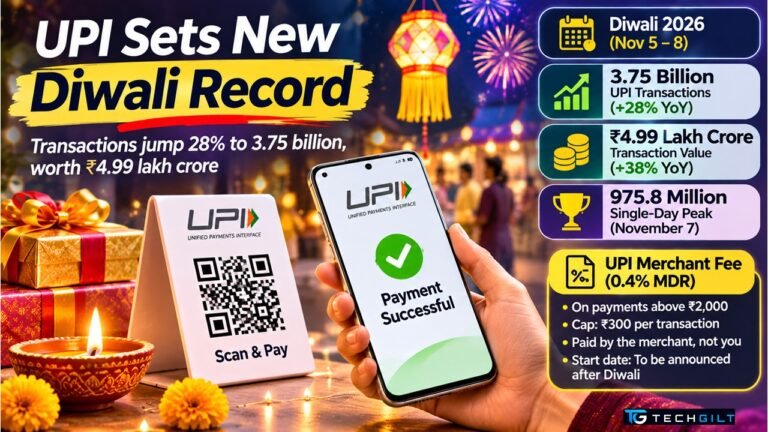
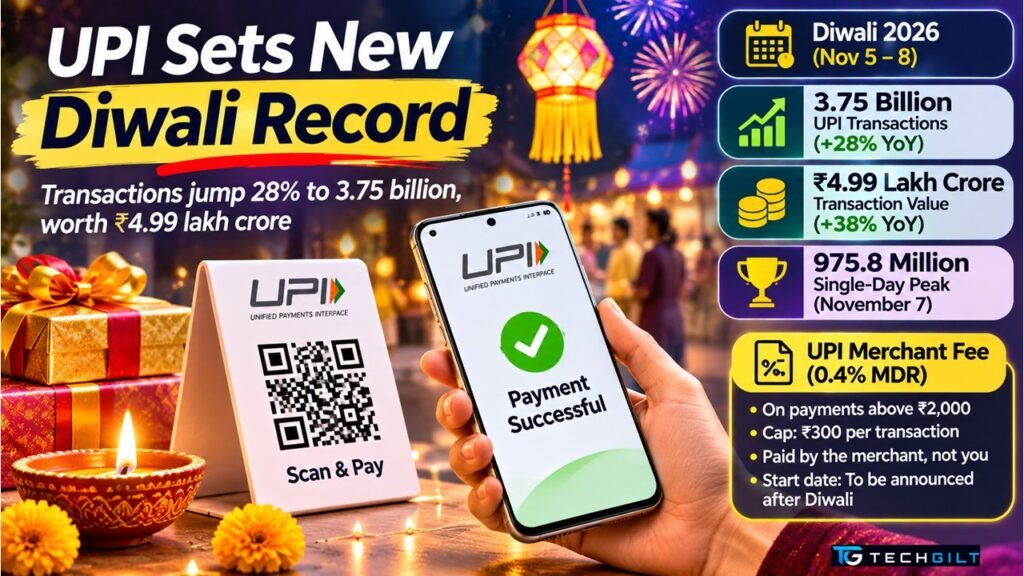
India celebrated Diwali with its phones as much as with diyas. According to NPCI data, UPI transactions reached 3.75 billion between November 5 and 8, 2026, up 28% from the same period last year. The value of those payments jumped 38% to ₹4.99 lakh crore. On a single day, November 7, UPI handled 975.8 million transactions, a new peak. The record comes just as the industry waits for NPCI to announce the start date of the new merchant fee (MDR) on larger UPI payments. Here’s what the numbers show and what happens next.
Quick Answer
Between November 5 and 8, 2026, UPI transactions rose 28% year-on-year to 3.75 billion, while their value grew 38% to ₹4.99 lakh crore, according to NPCI data. UPI recorded a single-day peak of 975.8 million transactions on November 7. Separately, NPCI’s planned 0.4% merchant fee on person-to-merchant UPI payments above ₹2,000 was deferred until after Diwali, and the new start date has not been announced yet. Customers won’t pay this fee directly, and person-to-person transfers stay free.
UPI Transactions at Diwali 2026
| Metric | Diwali 2026 |
|---|---|
| UPI transactions (Nov 5–8) | 3.75 billion |
| Growth vs last year | +28% |
| Transaction value (Nov 5–8) | ₹4.99 lakh crore |
| Value growth vs last year | +38% |
| Peak single day | 975.8 million (November 7) |
Source: NPCI data, as reported by NewsBytes.
For comparison, UPI transactions on Diwali eve in 2025 reached around 740 million, which was a record at the time. This year’s peak of 975.8 million shows how quickly digital payments are still growing in India.
Why UPI Transactions Grew So Fast
A few factors came together this Diwali:
- Festive shopping: gifts, clothes, sweets, electronics and gold all saw heavy buying in the days before Diwali.
- Small shops going digital: QR codes are now common at local stores, vegetable vendors and street stalls, not just big retailers.
- Higher-value payments: the value grew faster (38%) than the number of transactions (28%), suggesting people are using UPI for bigger purchases, not just small daily payments.
- More features: UPI now supports credit lines, RuPay credit cards on UPI and higher limits for some merchant categories, which encourage larger payments.
The UPI Merchant Fee: Still Waiting for a Date
The record arrives at an important moment. In September, NPCI’s UPI Steering Committee approved a 0.4% merchant discount rate (MDR) on certain UPI payments. It was due to start on October 15, 2026, but on October 13, NPCI deferred it, saying it would be implemented “immediately post Diwali” on a date to be notified separately. We covered that delay in UPI Merchant Fee Delayed.
Here’s what’s known about the planned fee, according to Business Standard and other reports:
- Rate: 0.4% on person-to-merchant (P2M) UPI payments above ₹2,000
- Cap: ₹300 per transaction (reached at ₹75,000)
- Who pays: the merchant, not the customer
- Free: person-to-person transfers and merchant payments up to ₹2,000
- Timing: reports suggest the new date could be notified in the second or third week of November, but nothing is official yet
Brokerages estimate that the fee could earn the payments industry ₹15,000–20,000 crore a year, and banks have said they plan to invest it in technology, security and infrastructure.
What It Means for You
If you’re a customer: you don’t need to do anything. UPI payments to friends and family stay free, and the merchant fee isn’t meant to be charged to you. If a shop tries to add a “UPI charge” to your bill, you can question it.
If you run a shop or business: once the fee starts, UPI payments above ₹2,000 will cost you 0.4%, up to ₹300 per payment. Small payments under ₹2,000, which make up most daily sales for small shops, stay free.
Stay alert for scams: festive seasons and payment rule changes are favourite times for fraudsters. Ignore messages claiming you must “update UPI” or pay a “new UPI fee” through a link. Never share your UPI PIN.
What Happens Next
All eyes are now on NPCI’s notification of the MDR start date. We’ll update this article once the date is announced. Meanwhile, the Diwali figures make one thing clear: UPI transactions are still growing fast, even after a decade of rapid expansion.
UPI Merchant Fee Delayed
Spot and Report UPI Scams
Frequently Asked Questions
How many UPI transactions happened during Diwali 2026?
According to NPCI data, UPI recorded 3.75 billion transactions worth ₹4.99 lakh crore between November 5 and 8, 2026.
What was the highest single-day UPI record?
UPI transactions hit 975.8 million on November 7, 2026, during the Diwali weekend.
Will I have to pay a fee on UPI transactions?
No. The planned 0.4% fee applies to merchants on payments above ₹2,000. Person-to-person transfers and smaller merchant payments remain free.
When will the UPI merchant fee start?
NPCI said it will start after Diwali on a date to be notified separately. As of November 10, 2026, the date hasn’t been announced.
Why did UPI transactions grow so much this year?
Festive shopping, wider QR code use at small shops, larger purchases on UPI and new features such as credit on UPI all contributed.
Conclusion
UPI’s Diwali 2026 numbers are another milestone for India’s digital payments story: 3.75 billion transactions worth ₹4.99 lakh crore in just four days, with a record 975.8 million in a single day. The next big change is the merchant fee on larger UPI payments, now expected soon after Diwali. For customers, UPI remains free. For merchants, it’s time to plan for the new costs on bigger payments.
My take: What stands out to me is that the record-breaking UPI usage during Diwali highlights how digital payments have become an essential part of daily life in India. From large retailers to small vendors, people increasingly rely on UPI for transactions. The growth in transaction value is particularly encouraging, as it indicates rising confidence in making larger digital payments. However, as UPI expands, maintaining strong security, fraud prevention and reliable infrastructure must remain priorities. Any future merchant fees should also be transparent, so that businesses clearly understand the costs and benefits involved. I would like to conclude by saying: “UPI has changed how India pays; the next challenge is making every digital payment safe, simple and trustworthy.”
Over to You
Did you pay mostly by UPI this Diwali, or did you still use cash and cards? Tell us in the comments below.