Why the government ordered Jack Dorsey’s offline messaging app off the App Store, what Section 69A says, and what it means for users
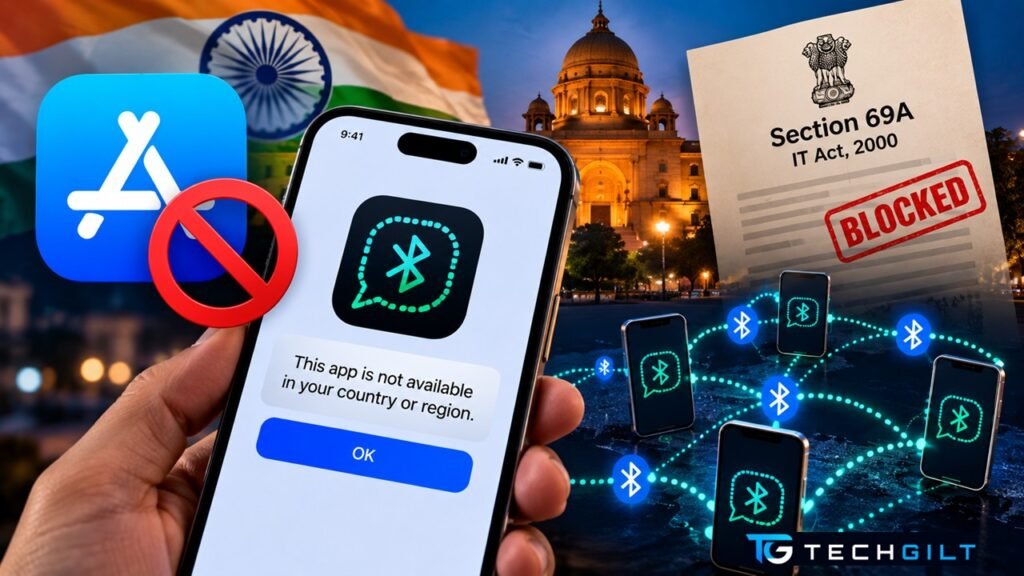
The Bitchat ban in India became public on October 3, 2026, when Twitter co-founder Jack Dorsey shared a notice from Apple on X. Apple had removed Bitchat, his offline, internet-free messaging app, from its India App Store following an order from the Ministry of Electronics and Information Technology (MeitY). It’s the second time this year that Indian authorities have acted against the app. Here’s what Bitchat is, what exactly happened, the law behind it, and what it means for users in India.
Quick Answer
The Bitchat ban began when Apple removed Bitchat from its India App Store after MeitY issued a blocking demand under Section 69A of the Information Technology Act, 2000. Apple’s notice said the app contained content considered illegal in India, but it didn’t say what that content was. Bitchat’s TestFlight beta versions are also blocked in India, while the app remains available in other countries. This follows an earlier action in July 2026, when access to Bitchat’s code on GitHub was restricted in India.
What Is Bitchat?
Bitchat is a messaging app backed by Jack Dorsey that works very differently from WhatsApp or Telegram:
- No internet needed: It sends messages between nearby phones over Bluetooth, hopping from device to device in a “mesh” network.
- No central server: There’s no company server in the middle that stores or routes messages.
- No sign-up: You don’t need a phone number, email, or account to use it.
- End-to-end encrypted: Only the sender and receiver can read messages.
These features make Bitchat useful where internet access is cut off, such as during natural disasters, crowded events, or government-ordered internet shutdowns. Supporters see that resilience as its biggest strength. Authorities see the same features as a problem, because messages are hard to monitor or trace.
What Happened: The Bitchat Ban Timeline
| When | What happened | Legal basis |
|---|---|---|
| July 2026 | The Indian Cybercrime Coordination Centre (I4C), part of the Home Ministry, had access to Bitchat’s code repositories on GitHub restricted in India | Section 79(3)(b) of the IT Act |
| October 3, 2026 | Apple removes Bitchat from its India App Store after a MeitY demand; Dorsey shares the notice on X | Section 69A of the IT Act |
| Same period | The app is also reported to be unavailable on the Google Play Store in India, and its website inaccessible through several internet providers | Not publicly specified |
According to the notice reported by Storyboard18, Apple told the developer to contact MeitY directly for more information about the takedown and India’s legal requirements. Apple also confirmed that Bitchat remains available in the other countries the developer has chosen.
What Is Section 69A of the IT Act?
Section 69A allows the central government to order the blocking of online content, including apps and websites, when it considers this necessary in the interest of India’s sovereignty and integrity, defence, security of the State, friendly relations with other countries, public order, or to prevent incitement to an offence.
Two points are worth knowing:
- Blocking orders are usually confidential. Under the 2009 Blocking Rules, requests and orders are kept confidential, which is why the exact reasons behind the Bitchat ban haven’t been made public.
- The Supreme Court has upheld the law, with safeguards. In the landmark Shreya Singhal v. Union of India (2015) judgment, the Supreme Court upheld Section 69A, relying on procedural safeguards such as hearing the affected party and recording reasons in writing.
India has used Section 69A before to block apps, including hundreds of Chinese apps from 2020 onwards and several encrypted messaging apps in recent years.
Why Did the Government Order the Bitchat Ban?
MeitY hasn’t publicly explained its reasons, and Apple’s notice didn’t identify the specific content. However, the earlier July action gives a clue: I4C had reportedly raised concerns about Bitchat’s decentralised design. An app with no servers, no registration, and encrypted Bluetooth messaging is very difficult for law enforcement to monitor, which raises worries about misuse by criminals or for spreading unlawful content, especially during periods of unrest.
Criticism of the Bitchat Ban
Digital rights groups have pushed back strongly. SFLC.in, a legal services organisation focused on digital rights, condemned the block. It argued that, in practice, Section 69A is applied in a way that defeats the safeguards the Supreme Court relied on, since typically only the platform (here, Apple) gets notice, not the app’s creator. It also pointed out that no blocking order for Bitchat has been made public, which makes it impossible to challenge the specific grounds.
Critics also note that the app’s main value is helping people communicate during internet shutdowns, and India has historically imposed more internet shutdowns than almost any other country.
What the Bitchat Ban Means for Users in India
- You can’t download Bitchat from Apple’s India App Store, and it’s reported to be unavailable on Google Play in India too.
- Beta testing is blocked: Bitchat’s TestFlight builds no longer work in India.
- Avoid unofficial copies: Downloading the app from unofficial websites or sideloading it carries security risks, as such files can be tampered with, and may also put you in a legal grey area given the government’s order.
Also read: Apple Pay Launches in India
Frequently Asked Questions
Is there a Bitchat ban in India?
Bitchat has been removed from Apple’s India App Store following a MeitY order under Section 69A of the IT Act, and is reported to be unavailable on Google Play in India as well.
What caused the Bitchat ban in India?
The government hasn’t stated its reasons publicly. Apple’s notice said the app contained content considered illegal in India. Authorities had earlier raised concerns about its decentralised, hard-to-monitor design.
What is Section 69A of the IT Act?
It’s the provision that lets the central government block online content in the interest of national security, public order, and similar grounds. Blocking orders under it are usually kept confidential.
Is Bitchat still available outside India?
Yes. Apple confirmed the app remains available in other countries selected by the developer.
What makes Bitchat different from WhatsApp?
Bitchat works without the internet, using Bluetooth to pass messages between nearby phones. It has no central servers and doesn’t require a phone number or account.
Conclusion
The Bitchat ban highlights a growing tension in India’s digital policy: the government’s concern about untraceable communication on one side, and the value of tools that keep people connected during shutdowns on the other. With no public blocking order and no stated reasons, the debate is likely to continue, and possibly reach the courts.
My take: As a citizen, I would like to know, and I believe I have the right to know, why a communication tool suddenly disappeared. This is especially true for apps like Bitchat, which play a vital role when the internet is down or in areas with no connectivity.
On the other hand, the government has every right to block an app if it poses a threat to national security. After all, protecting the country and its citizens is the government’s first priority. I respect that decision, but it could have been handled more transparently. Blocking orders issued under Section 69A, or at least the core reasons behind them, should be made public in some form, so that citizens can understand why an app was banned.
Over to You
Should the government be able to block apps like Bitchat without making its reasons public? Share your thoughts in the comments below.