Supported cards, how to set it up, and what it means for UPI users
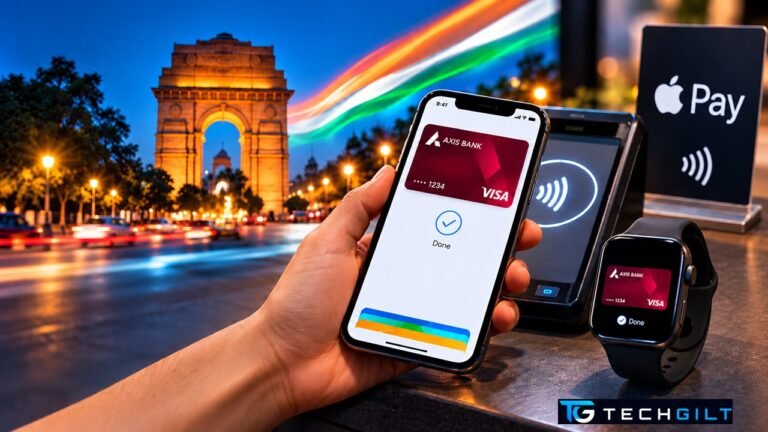
After years of speculation, Apple Pay in India is finally a reality. iPhone, iPad, and Apple Watch users can now tap to pay in stores and check out in apps and on websites. But the launch comes with an important catch: only one bank is supported for now, and there’s no UPI or RuPay support. If you’re wondering whether you can use it today, how to set it up, and whether it’s worth switching from your UPI app, this guide covers everything.
Quick Answer
Apple Pay in India went live at the end of September 2026. At launch, it works only with Axis Bank credit cards on the Visa and Mastercard networks. It supports contactless payments in stores and checkout in apps and online, without entering a PIN or OTP. HDFC Bank, ICICI Bank, SBI Card, RuPay cards, and UPI are not supported yet.
What Exactly Has Launched?
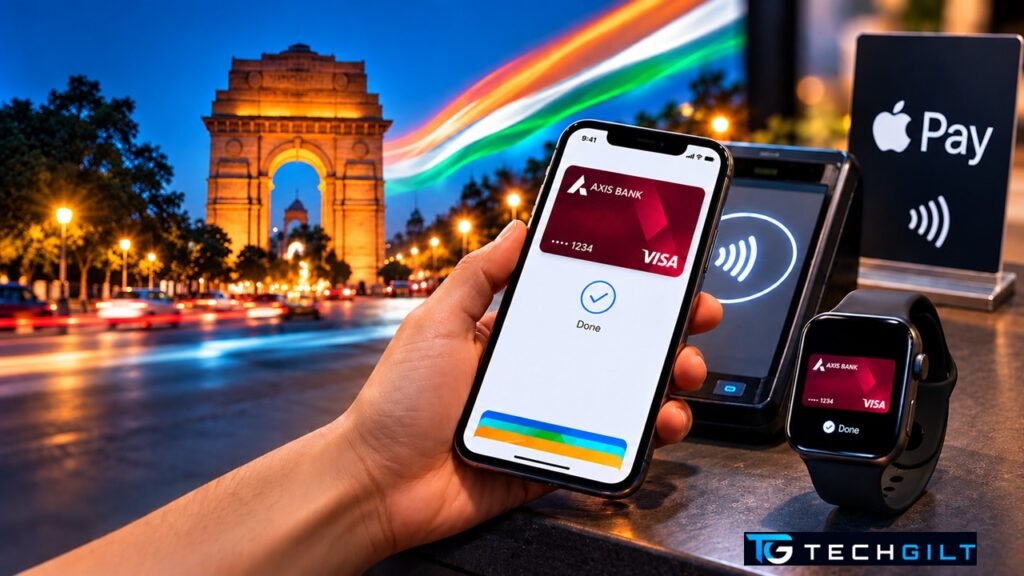
Apple Pay is Apple’s digital wallet and contactless payment service, already available in dozens of countries. In India, it now works on iPhone, iPad, and Apple Watch, and Apple says Mac support is coming soon.
Once a card is added, you can:
- Pay in stores by holding your iPhone or Apple Watch near any card terminal that accepts contactless (NFC) payments
- Pay in apps and on websites that offer Apple Pay at checkout
- Skip PINs and OTPs, since each payment is authorised with Face ID, Touch ID, or your device passcode
Apple says it does not keep transaction details linked to individual users. Your actual card number is also not shared with the merchant.
Which Banks and Cards Support Apple Pay in India?
This is the biggest limitation right now. At launch, only Axis Bank-issued Visa and Mastercard credit cards can be added to Apple Pay.
Several things are not supported yet:
- Debit cards, including Axis Bank debit cards
- RuPay cards, India’s domestic card network
- Other major banks, such as HDFC Bank, ICICI Bank, and SBI Card. According to TechCrunch, these banks are holding off while commercial terms are still being negotiated.
- UPI payments
Apple is expected to add more banks to Apple Pay in India over time, but no timeline has been announced.
Where Can You Use Apple Pay in India?
Apple says Apple Pay will be accepted at millions of merchant locations across India. Launch partners include Apple Store locations, Zomato, Blinkit, Croma, Reliance brands, Tata 1mg, Ixigo, Chaayos, and Interflora.
Beyond named partners, Apple Pay should work at most stores whose card machine accepts contactless Visa or Mastercard payments. Look for the contactless symbol on the terminal.
How to Set Up Apple Pay in India
If you have an eligible Axis Bank credit card, setup takes about two minutes:
- Open the Wallet app on your iPhone
- Tap the + button, then choose Debit or Credit Card
- Scan your Axis Bank card with the camera, or enter the details manually
- Complete verification with Axis Bank (usually an SMS code or in-app confirmation)
- Once approved, your card appears in Wallet, ready to use
You can also add your card directly from the Axis Bank mobile app.
To pay in a store: double-click the side button on your iPhone, authenticate with Face ID or your passcode, and hold the phone near the terminal. On Apple Watch, double-click the side button and hold the watch face near the reader.
Apple Pay in India vs UPI: Which Should You Use?
For most Indians, UPI remains the default way to pay digitally. It’s free for consumers, supported by every bank, and accepted everywhere from malls to roadside tea stalls. Apple Pay isn’t trying to replace UPI, at least not yet. It’s a faster, more private way to use your credit card.
| Feature | Apple Pay (India, at launch) | UPI |
|---|---|---|
| Payment source | Axis Bank credit cards only | Bank account (all major banks) |
| How you pay | Tap on NFC card terminal, or in-app checkout | Scan QR code or enter UPI ID |
| Authentication | Face ID / Touch ID / passcode | UPI PIN |
| Works at small shops | Only if they have a contactless card machine | Almost everywhere |
| Card rewards | Yes, your credit card’s usual rewards | Limited |
| Devices | iPhone, iPad, Apple Watch | Any smartphone |
The timing is interesting too. From October 15, 2026, a new 0.4% merchant fee (MDR) applies to person-to-merchant UPI payments above ₹2,000, capped at ₹300 per transaction. Consumers won’t be charged directly, since the fee is paid by merchants. But it marks the end of UPI’s completely zero-fee era for larger merchant payments, which narrows the cost gap between UPI and cards slightly for businesses.
Why This Launch Matters for Apple
India has become one of Apple’s most important growth markets, with rising iPhone sales, expanding local manufacturing, and new Apple Stores. Apple Pay adds a services layer on top of that hardware growth.
Still, the launch is a cautious first step. Without UPI, RuPay, or the biggest Indian banks, Apple Pay will appeal mainly to iPhone users who already pay with an Axis Bank credit card. Wider adoption depends on how quickly more banks sign on, and on whether Apple ever finds a way to work with UPI.
Also read: ChatGPT Hits 1 Billion Users
Frequently Asked Questions
Is Apple Pay available in India now?
Yes. Apple Pay launched in India at the end of September 2026 on iPhone, iPad, and Apple Watch, with Mac support expected later.
Which cards work with Apple Pay in India?
Only Axis Bank credit cards on the Visa and Mastercard networks at launch. Debit cards, RuPay cards, and cards from other banks are not yet supported.
Can I use UPI with Apple Pay?
No. Apple Pay in India currently does not support UPI. You’ll still need apps like Google Pay, PhonePe, or Paytm for UPI payments.
Do I need to enter a PIN or OTP when using Apple Pay?
No. Payments are authorised using Face ID, Touch ID, or your device passcode instead of a PIN or OTP.
Will HDFC, ICICI, and SBI cards be added?
Apple is expected to expand bank support over time, but no dates have been announced. Reports suggest these banks are still negotiating terms with Apple.
Conclusion
The debut of Apple Pay in India is a meaningful milestone, but it’s a soft launch rather than a payments revolution. If you’re an iPhone user with an Axis Bank credit card, it’s worth setting up today for faster, more private card payments with your usual rewards. Everyone else should keep using UPI for now and watch for more banks to join.
My take: It’s genuinely interesting to see one of the biggest players in tech enter the Indian market as another way to pay. Today I use Google Pay, but if things work out well, I may switch to Apple Pay tomorrow.
As a customer, my choice depends on three things: how easily I can make payments, how easily a payment can be reversed if something goes wrong, and how good the customer care is. Let me be very clear: Apple Pay will only gain real importance in India if it joins UPI and provides good customer care. And by good customer care, I don’t mean ending up with an AI chatbot or a voice-guided menu. I don’t want to waste my time on those. I want a dedicated human to pick up my call immediately and help me sort out my problem. Let’s see how things move from here.
Over To You
Are you planning to use Apple Pay, or will you stick with UPI? Share your thoughts in the comments below.