What OpenAI’s big milestone means for 2026
Four years ago, ChatGPT didn’t exist — today it has crossed 1 billion users, a scale few products in history have reached. Today, more people actively use it every week than the entire population of Europe and North America combined. On July 31, 2026, OpenAI made it official: its AI products have crossed the symbolic 1-billion-user mark — and the company chose to pair that announcement with some of its biggest price cuts yet. Here’s what actually happened, and why it matters even if you’ve never typed a single prompt into ChatGPT.
Quick Answer
OpenAI confirmed on July 31, 2026 that its AI products led by ChatGPT have crossed 1 billion users and 2 million business customers, achieving this in under four years since ChatGPT’s November 2022 launch. The announcement landed alongside steep price cuts on two GPT-5.6 models, as OpenAI works to fend off growing competition from Google Gemini and Anthropic’s Claude.
The Billion-User Milestone, Explained
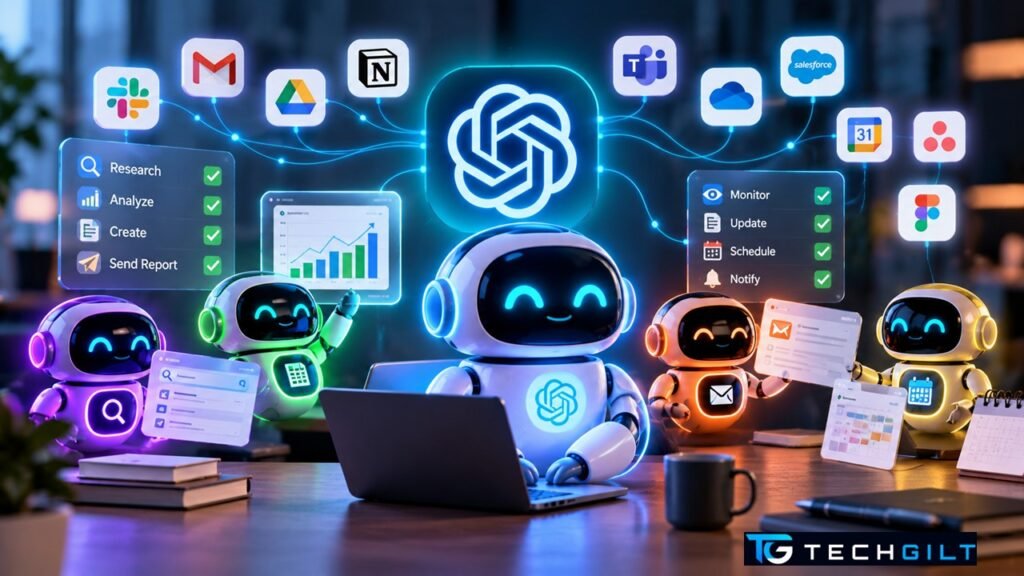
OpenAI’s blog post was brief but pointed: its models now reach more than 1 billion active users and more than 2 million businesses. That figure isn’t limited to the ChatGPT app alone, it spans OpenAI’s full family of consumer and business interfaces, including Codex (its AI coding assistant) and ChatGPT Work, a platform that lets companies plug ChatGPT into their existing business tools.
To put the speed of this growth in perspective: it took platforms like Google Maps, Instagram, and YouTube five to eight years to reach 1 billion users. ChatGPT got there in roughly three years for its core monthly user base, making it one of the fastest-adopted consumer technologies in history.
A Milestone That Arrived Late
Here’s the part OpenAI’s announcement didn’t emphasize: reaching 1 billion users was originally expected by the end of 2025. It came about seven months behind schedule instead. Growth slowed through late 2025, partly due to user backlash following the GPT-5 rollout and partly because of intensifying competition — Google’s Gemini has climbed to roughly 950 million monthly active users of its own, benefiting from built-in integration across Google Search and Android.
The pressure isn’t just on the consumer side. Anthropic, the company behind Claude, has been steadily closing the enterprise gap with OpenAI, an area that generates higher margins per customer than free consumer chat.
The Price Cuts That Came With It
The same week as the billion-user announcement, OpenAI quietly slashed pricing on its GPT-5.6 model family:
- GPT-5.6 Luna (the budget-tier model): cut by 80% — now $0.20 per million input tokens and $1.20 per million output tokens, down from $1.00 and $6.00
- GPT-5.6 Terra (the mid-tier model): cut by 20% — now $2 per million input tokens and $12 per million output tokens, down from $2.50 and $15.00
- GPT-5.6 Sol (the flagship, most capable model): pricing unchanged
For developers and businesses building on OpenAI’s API, this is a meaningful shift — Luna in particular becomes dramatically cheaper for high-volume, lower-complexity tasks like chatbots, summarization, and basic content generation.
Why This Matters Beyond the Headline Numbers
Reaching 1 billion users is a marketing milestone, but the price cuts reveal the real strategic story. OpenAI is scaling incredibly fast — but scaling at a steep cost. Recent reporting has pointed to deeply negative operating margins even as revenue climbs into the billions per quarter. Cutting prices while user numbers explode is a classic land-grab move: get as many people and businesses locked into your ecosystem as possible, worry about profitability later.
For the 1 billion users already on the platform, the practical impact is simple: continued free-tier access, a wider feature set, and — thanks to the competitive pressure from Gemini and Claude — likely more improvements arriving faster than they otherwise would.
Frequently Asked Questions
Q: Does the 1 billion figure mean 1 billion people use ChatGPT every day?
No — the 1 billion users figure is an active user count across OpenAI’s full product suite (ChatGPT, Codex, ChatGPT Work), not a daily figure. “Active” typically means used at least once within a set period, commonly weekly or monthly.
Q: Is ChatGPT still free to use?
Yes. ChatGPT’s Free tier remains available, though with usage limits, slower response times, and reduced access to the latest models compared to paid Plus and Pro tiers.
Q: How does this compare to Google Gemini and Claude?
Gemini sits close behind at roughly 950 million monthly active users, helped by its deep integration into Google’s existing products. Anthropic’s Claude has a smaller consumer user base but has been gaining ground faster in enterprise/business adoption, an area OpenAI is now actively targeting too.
Q: Will the price cuts affect ChatGPT’s regular subscription plans?
No — these cuts apply specifically to API pricing (what developers and businesses pay to build with GPT-5.6 programmatically), not to the consumer ChatGPT Free/Plus/Pro subscription tiers.
Q: What’s the difference between GPT-5.6 Luna, Terra, and Sol?
They represent a capability ladder within the same GPT-5.6 family — Luna is the fastest and cheapest for simple tasks, Terra balances cost and capability for most everyday use, and Sol is the most powerful (and most expensive) for complex reasoning, coding, and high-stakes tasks.
Conclusion
Crossing 1 billion users in under four years is a genuinely historic pace of adoption — but the accompanying price cuts tell you this is far from a victory lap. OpenAI is locked in an increasingly expensive three-way race with Google and Anthropic, betting that scale now will pay off later.
It’s worth noting that DeepSeek has taken the opposite approach entirely — its web and mobile chat are completely free for individual users, with no subscription tier at all, unlike ChatGPT, Claude, or Gemini. Yet it hasn’t come close to matching their popularity. In a market this competitive, price alone clearly isn’t what wins people over.
So here’s the real question, now that ChatGPT has 1 billion users: what actually earns an AI company lasting trust and market share — rock-bottom pricing, raw capability, or something else entirely? Let us know what you think in the comments.
Catch more AI News coverage on TechGilt as this story develops.