Price, features, battery life and subscription details of Google’s screenless fitness tracker, and how it compares with Whoop
Google has brought its new screenless tracker to India, and it’s unlike most fitness bands you’ll see in shops. There’s no screen, no buttons and no notifications to distract you. Instead, the Google Fitbit Air is a tiny 12-gram tracker that quietly records your heart rate, sleep and activity, and shows everything in the Google Health app on your phone. Here’s what it costs, what it does, and who it’s really for.
Quick Answer
The Google Fitbit Air costs ₹13,999 in India and went on sale on October 2, 2026. It’s available on Google Store, Flipkart, Croma, Reliance Digital and other retailers in four colours: Obsidian, Berry, Lavender and Fog. It weighs 12g with the band, offers up to 7 days of battery life, is water-resistant to 50 metres (5ATM), and works with both Android and iPhone. Buyers get a 3-month free trial of Google Health Premium, which unlocks the AI-powered Google Health Coach.
Fitbit Air Price in India and Availability
| Detail | Fitbit Air |
|---|---|
| Price in India | ₹13,999 |
| Sale date | October 2, 2026 |
| Where to buy | Google Store, Flipkart, Croma, Reliance Digital and other retailers |
| Colours | Obsidian, Berry, Lavender, Fog |
| Launch offer | 3-month Google Health Premium trial |
These details come from Business Standard’s launch report. For comparison, it launched globally in May 2026 at $99.99 in the US, so Indian buyers are paying noticeably more.
Some retailers have mentioned bank cashback offers, so check the final price on the sale page before you buy.
What Is a Screenless Fitness Tracker?
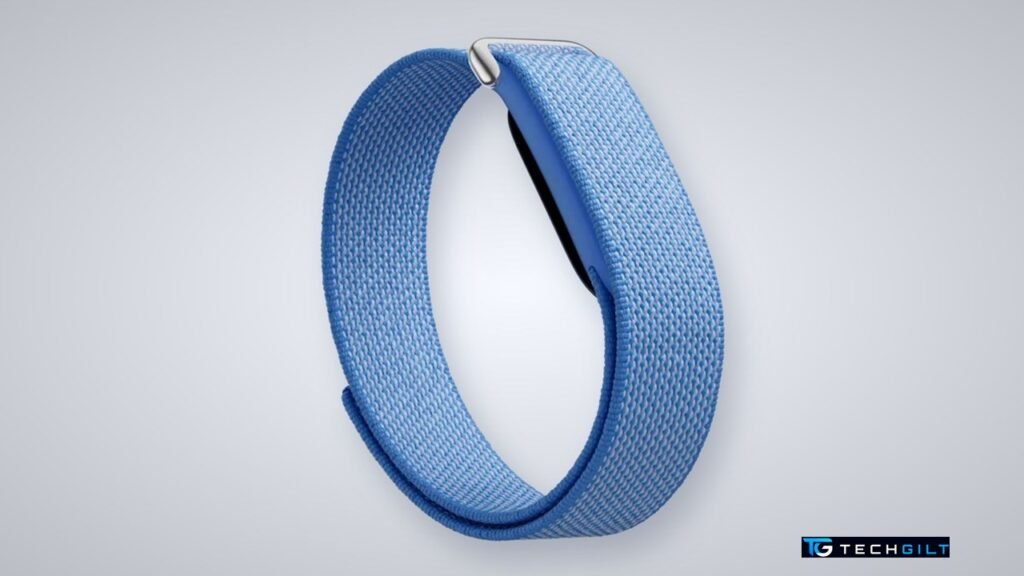
Most fitness bands and smartwatches have a display that shows the time, steps and notifications. This tracker skips all of that. It’s a small pebble-shaped module that sits in a fabric or silicone band and collects health data in the background, 24 hours a day.
To see your data, you open the Google Health app on your phone. The tracker only uses gentle vibrations and a small status light to communicate.
This idea was made popular by Whoop, a screenless band used by many athletes. The benefit is simple: fewer distractions, a lighter device and longer battery life.
Fitbit Air Specifications
| Feature | Details |
|---|---|
| Display | None (screenless) |
| Weight | 5.2g tracker only, 12g with band |
| Size | 34.9 x 17 x 8.3mm |
| Battery | Up to 7 days |
| Charging | USB-C; full charge in about 90 minutes, 5 minutes gives about 1 day |
| Water resistance | 5ATM (up to 50 metres) |
| Sensors | Optical heart rate, SpO2 (red and infrared), temperature, 3-axis accelerometer and gyroscope |
| Connectivity | Bluetooth 5.0 |
| Compatibility | Android 11 or later, iOS 16.4 or later |
| In the box | Tracker, band, USB-C charging cable |
These figures come from Google’s official specifications page.
Key Features
24/7 health tracking
The tracker continuously tracks heart rate, heart rate variability (HRV), resting heart rate, blood oxygen (SpO2) and skin temperature changes. Together, these help the app estimate how well you’re recovering and how much stress your body is under.
Sleep tracking
Because it’s so light and has no screen, it’s comfortable to wear at night. It tracks sleep stages (light, deep and REM) and shows your sleep patterns over time.
Irregular heart rhythm alerts
The tracker can notify you about signs of an irregular heart rhythm (AFib). This is a helpful early warning, but it isn’t a medical diagnosis. If you get an alert, speak to a doctor.
Automatic workout detection and AI logging
It detects common workouts automatically. You can also log workouts in the app, including by taking a photo of gym equipment or a workout board, and the AI fills in the details for you.
Google Health Coach
The Google Health Coach, powered by Gemini, gives personalised tips on sleep, fitness and recovery. This coach needs a Google Health Premium subscription. New buyers get 3 months free, but Google hasn’t clearly advertised the Indian price for Premium after the trial, so check it in the app before the trial ends.
Fitbit Air vs Whoop: Which Is Cheaper?
Its biggest rival is Whoop. According to The Week, Whoop’s band with a 12-month plan costs around ₹21,990 in India, and Whoop works on an ongoing subscription.
Google’s band, by comparison, costs ₹13,999 upfront, and its core tracking works without a subscription. You only pay extra if you want the AI coach after the free trial. For most Indian buyers, that makes Google’s tracker the more affordable way to try a screenless tracker.
Should You Buy the Fitbit Air?
Good choice if you:
- Want a lightweight tracker that’s comfortable to wear all day and night
- Care mainly about sleep, heart rate and recovery data
- Find smartwatch notifications distracting
- Use an Android phone or an iPhone (it works with both)
Consider alternatives if you:
- Want to see the time, steps or messages on your wrist
- Need built-in GPS for running without your phone
- Want a budget fitness band: several bands with screens cost far less than ₹13,999
Also read: Redmi 17C 5G India Launch
Also read: Best Earbuds Under ₹3,000
Frequently Asked Questions
What is the Fitbit Air price in India?
It costs ₹13,999 in India.
Does the Fitbit Air have a screen?
No. It’s a screenless tracker. You see your data in the Google Health app on your phone.
Does the Fitbit Air need a subscription?
No. Core tracking works without one. The AI-powered Google Health Coach needs Google Health Premium, which comes with a 3-month free trial.
Is the tracker waterproof?
It’s water-resistant to 50 metres (5ATM), so it’s fine for swimming and showers. Google recommends drying the band after it gets wet.
Does the Fitbit Air work with iPhone?
Yes. It works with iPhones running iOS 16.4 or later and Android phones running Android 11 or later.
Conclusion
The Google Fitbit Air brings the screenless tracker idea to India at a lower price than Whoop, with a 12g design, 7-day battery life, 5ATM water resistance and detailed heart, sleep and recovery tracking. It isn’t for everyone: at ₹13,999, it costs much more than basic fitness bands, and you need your phone to see anything. But for people who want health insights without constant notifications, the Fitbit Air is one of the most interesting wearables of the year.
Building a smarter home too? Read our Apple HomeView India Launch article.
My take: In my view, the Google Fitbit Air is an interesting step towards making personal health tracking simpler and less distracting. I like the idea of wearing a lightweight device that quietly monitors my activity and sleep without constantly pulling my attention to a screen. At ₹13,999, though, I would expect it to deliver significantly more value than a standard fitness band.
I believe AI can help us understand our health patterns and build better habits, but it should support our decisions rather than replace professional medical advice. If my priorities were comfort, sleep monitoring and minimal distraction, I would choose a screenless tracker. Ultimately, the best wearable isn’t the one that collects the most data, but the one that helps us make better decisions about our health.
I would conclude by saying: “Technology should help us pay more attention to our health, not make us pay more attention to our screens.”
Product image: Google
Over to You
Would you choose a screenless tracker, or do you prefer a smartwatch with a display? Share your thoughts in the comments below.